

Viticulture · Terroir · Grape varieties
Soil, drainage, slope and climate decide what a vine does with its energy. This is what happens between the rock and the bottle, and why the best vineyard land often looks like the worst farmland.
One of the things I have always found interesting about wine is that some of the best grapes in the world seem to come from places where, on the face of it, you would not expect much to grow at all.
If you were looking at the same piece of land for growing vegetables, you might immediately start thinking about improving the soil, adding compost, increasing water retention and making the environment as fertile as possible.
With grapevines, it is almost the opposite. And that is where it gets interesting.
When we normally talk about growing plants, we associate healthy growth with rich, fertile soil. Give a plant plenty of nutrients, plenty of water and good conditions, and naturally you would expect a better result.
Grapevines complicate that idea. A vine growing in extremely fertile soil can become almost too comfortable. Instead of putting its energy into producing and ripening grapes, it puts that energy into vegetative growth: leaves, shoots and canes. You end up with a huge, healthy-looking plant without the concentration or balance you want in the fruit.
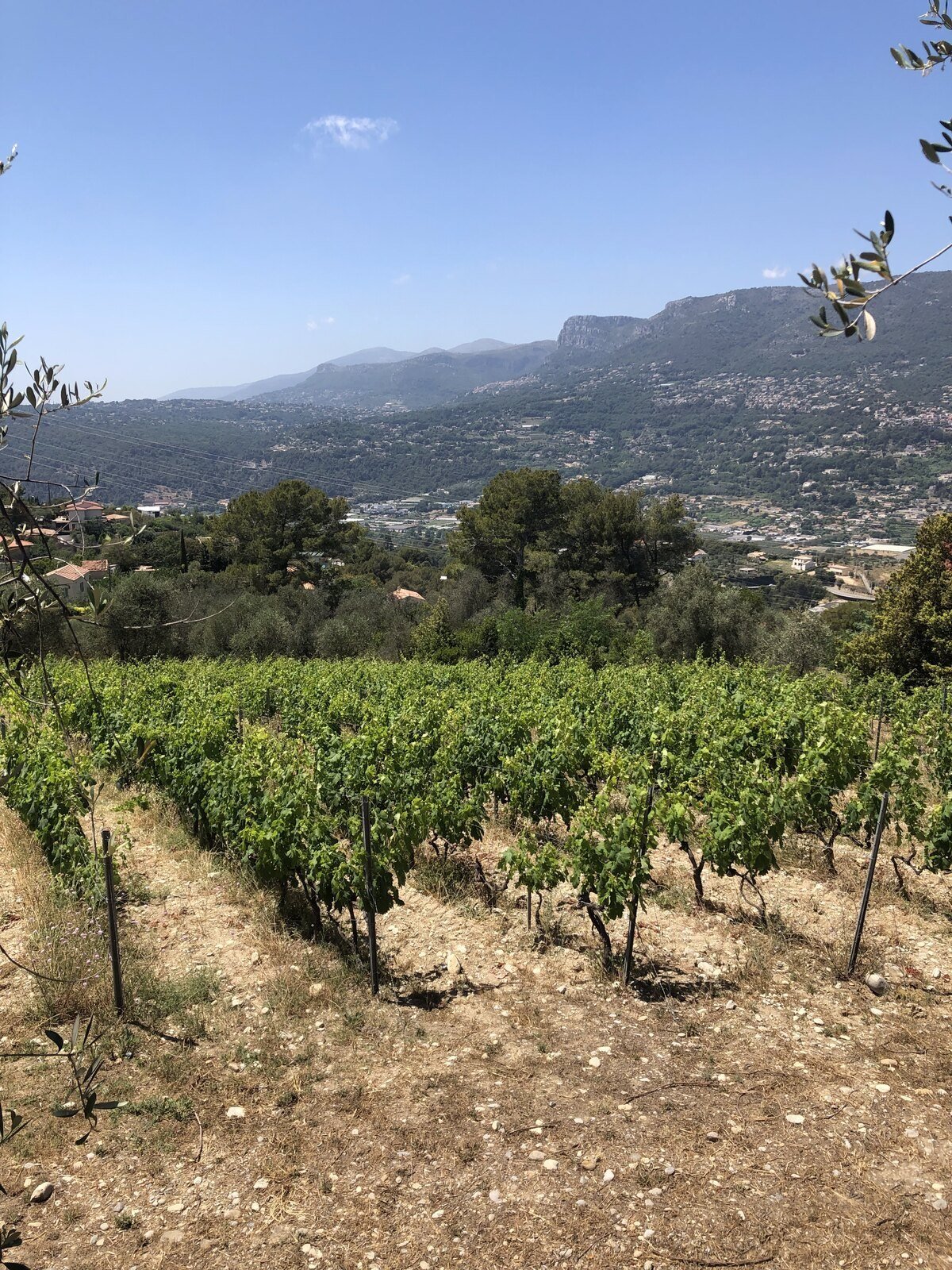
This is why many famous wine regions have soils that look terrible from an agricultural point of view. Gravel. Slate. Limestone. Sand. Volcanic rock. Clay mixed with stones. Sometimes you can look at photographs of vineyards and genuinely wonder how anything is growing there.

One of the biggest differences is what happens below the surface. When water and nutrients sit conveniently near the top of the soil, roots have very little reason to travel far. When conditions are harder, the vine has to search.
Grapevine roots can develop surprisingly deep and extensive systems depending on the soil, geology, water table, rootstock and age of the plant. That matters because the vine is then no longer completely dependent on what is happening in the first few centimetres of soil. Roots move through cracks and gaps in rock, following moisture deeper underground.
This does not mean vines enjoy being starved of water. There is a real difference between controlled water stress and simply killing a plant through drought. But moderate stress changes the behaviour of the vine. The plant has to prioritise, and when the balance is right that is very useful for grape production.
This is probably the part I find most interesting. Some of the best vineyard land has extremely good drainage. Again, that sounds strange. Surely you would want soil that holds as much water as possible?
Not necessarily. Grapevines do not like sitting in waterlogged soil. Roots need oxygen as well as water, and prolonged saturation creates problems with root health and disease. So a soil full of gravel, stones or fractured rock is an advantage. Rain falls, the vine gets access to water, and the excess keeps moving through the soil rather than sitting around the roots.
This is one reason vineyards are so often found on slopes. Gravity moves water away. Depending on the direction they face, slopes also receive more sunlight, and cold air drains downhill rather than settling around the plants, which reduces frost exposure. Suddenly that apparently inconvenient hillside starts making a lot more sense.

During the day, rocks absorb heat from the sun. Later, as temperatures fall, some of that heat is released back into the surrounding air. In cooler climates even small differences in temperature matter during the growing season.
Grapes need enough warmth and sunlight to ripen, but they also need time. Too much heat accelerates ripening, pushes sugar up quickly and drops acidity. Too little and the grapes may not ripen at all. Viticulture becomes a balancing exercise across sunlight, temperature, rainfall, drainage, soil, elevation, slope and wind. Even the difference between daytime and nighttime temperature changes how the fruit develops.
There is an important distinction here. When people say grapes grow well in poor soil, it does not mean the vine wants soil with no nutrients at all. It means highly fertile agricultural land is not required, and that excessive fertility can actually make the vineyard harder to manage.
The ideal is balance. Enough nutrients to support a healthy vine. Enough water to keep it functioning. But not so much of either that the vine spends the entire season producing leaves.
Growers manage that balance actively: pruning, canopy management, yield control, water monitoring, and how the soil between the rows is handled. In some vineyards irrigation is essential. In other regions it has historically been restricted or simply unnecessary. So although people romanticise the idea of vines suffering, the real objective is controlled growth rather than suffering for its own sake.
Eventually you cannot talk about wine without coming across the word terroir. It sounds slightly pretentious until you understand what people are actually trying to describe.
Terroir is the idea that a wine is shaped by the environment its grapes were grown in. Not just soil, but climate, elevation, slope, sun exposure, water availability, local geology, and depending on how broadly you use the term, the way people have historically grown vines in that particular place.
It is why two vineyards growing the same variety can produce noticeably different wines. The genetic material is similar and the grape has the same name, but the environment is different, so the vine behaves differently, the fruit develops differently, and the wine tastes different.
There is something I like about that concept, because it applies well beyond wine. You cannot always separate an outcome from the environment that produced it.
Grape variety is where the growing conditions become a style you can actually taste. Some varieties ripen early and some late; some have thick skins that resist rot and some are thin-skinned and fragile; some hold acidity in the heat and some lose it immediately. Matching variety to site is most of the job.
What follows is not a complete list. It is the handful of varieties that explain most of the wine you are likely to come across, and the conditions each of them needs.
Thick-skinned and late to ripen, so it needs warmth and, above all, well-drained ground that holds the day's heat. Blackcurrant, cedar, firm tannin, long life.
gravel, warmth, long seasonRipens earlier and copes with cooler, damper clay soils that would leave Cabernet green. Plum and soft tannin; the reason most Bordeaux is a blend.
clay, moderate warmthThin-skinned, prone to rot, fussy about heat. Rewards cool sites on limestone with perfume and delicacy rather than power.
cool, limestone, patienceThe clearest illustration of terroir there is. Granite in the northern Rhône gives pepper and restraint; Barossa heat gives density and sweet fruit. Same grape.
granite when cool, heat when boldHigh in both tannin and acid, very late ripening, and unwilling to travel. Needs calcareous marl and autumn fog to finish the job.
calcareous marl, long autumnHandles the continental swing of hot days and cold nights that defines the Ebro and Duero valleys.
continental, altitudeSavoury sour-cherry fruit and high acidity; wants sunshine but keeps its freshness on Tuscan hillsides.
hillside, galestro soilsMade its name in Cahors, found its scale in Mendoza, where altitude supplies the cool nights that keep colour and acid intact.
high altitude, dryDrought and heat tolerant, often grown as unirrigated bush vines. Alcohol comes easily; freshness is the challenge.
heat, drought, old vines
Close to a neutral canvas, which is exactly why it shows site so plainly. Chablis limestone gives it steel; warmer sites and oak give it breadth.
limestone, cool to moderateAromatic and acid-driven. Flint and chalk in the Loire give restraint; Marlborough sunshine gives pungency.
cool, flint or chalkCold-hardy and naturally high in acid, which is why it thrives further north than almost anything else. Slate soils and steep slopes do the ripening.
cool, slate, steepExtraordinarily versatile: bone dry, sparkling or richly sweet, depending on the season and the picking decision.
moderate, tuffeau or graniteCrisp and neutral picked early in the Alps; weighty and spiced when left to ripen in Alsace.
cool, picking date decides styleThick-skinned enough to cope with Atlantic rain and humidity, on granite soils a few miles from the sea.
maritime, graniteLow acid and highly aromatic; needs full ripeness but loses freshness fast if the site is too warm.
warm but not hotPeppery and textural, at home on loess and windswept terraces along the Danube.
loess, cool nightsChardonnay, Pinot Noir and Pinot Meunier picked early and deliberately underripe. High acid is the point, not a flaw, which is why chalk-soiled cool regions suit it.
chalk, cool, early pickingTouriga Nacional and Touriga Franca on Douro schist, ripened hard and stopped mid-ferment with spirit. Palomino on Andalucía's albariza chalk for sherry.
schist or albariza, heatRiesling, Chenin and Sémillon left on the vine for botrytis or frost. Needs a specific autumn: damp mornings, dry afternoons.
autumn fog, dry afternoons
Grapes for wine are grown in a fairly narrow band of the world, roughly between 30 and 50 degrees of latitude in both hemispheres, with altitude and maritime influence stretching that band in places. Within it, average growing season temperature does most of the work in deciding what can be planted and what style results.
| Band | Typical regions | What it produces | The risk |
|---|---|---|---|
| CoolGrowing season averaging roughly 13–15°C | Champagne, Mosel, Chablis, Marlborough, southern England | High acid, lower alcohol, aromatic whites, sparkling, light reds | Under-ripeness, spring frost, wet harvests |
| ModerateRoughly 15°C to 17°C | Bordeaux, Burgundy, Rioja, Tuscany, Willamette | Structured reds and full whites; ripeness and acidity both achievable | Vintage variation: the year matters enormously |
| Warm to hot17°C and above | Barossa, Douro, southern Rhône, Mendoza, Central Valley | Ripe, generous, higher alcohol; deep colour and soft acid | Sunburn, drought, acid loss, compressed harvest |
Average temperature is only part of it. The gap between day and night matters just as much: warm days ripen the fruit while cold nights preserve acidity, which is why high-altitude and continental sites can make fresh wines in places that sound far too hot on paper. Maritime regions have milder swings and later, wetter harvests. Continental regions have shorter, sharper seasons and a real risk of frost at both ends.

Look at enough vineyards and the pattern shows up everywhere. Parts of Bordeaux are famous for gravel. The Mosel has vines on incredibly steep slate. Some vineyards in the Canary Islands grow in volcanic landscapes that look lunar. Santorini grows vines in dry, windy volcanic conditions. The Douro has vineyards cut into rocky hillsides where farming anything looks difficult.
Yet humans have spent centuries working out which varieties suit these places. Instead of transforming the land to suit the plant, viticulture often becomes about finding a plant that expresses something interesting because of the land.

Gravel on the Left Bank, clay and limestone on the Right. The gravel drains hard and stores heat, which is why Cabernet sits on one side of the river and Merlot on the other.

Blue slate on slopes so steep they are worked by hand or by winch. The slate holds heat and the aspect catches what little sun a northern latitude offers.

Schist terraces cut into the hillside, hot summers and very low rainfall. The vine roots split the rock to find water.

Limestone and marl, mapped plot by plot over centuries. A few metres up or down the slope is treated as a different wine, and priced like one.

Volcanic ash and pumice, almost no rainfall, relentless wind. Vines are trained into low baskets on the ground to shelter the fruit and catch sea mist.

High-altitude desert at the foot of the Andes. Altitude supplies the cool nights, snowmelt supplies the irrigation, and the dry air keeps disease away.

Chalk that is geologically the same belt that runs under Champagne, and a climate that has warmed just enough to ripen Chardonnay and Pinot Noir for sparkling wine.

Llicorella, a slate and quartz soil, on brutally steep slopes. Old Grenache and Carignan vines with tiny yields and roots metres deep.
There is another idea here I find fascinating. Maximum growth is not always the objective. If you were growing something purely to maximise biomass, you would want the biggest possible plant. Wine grapes are different. The objective is the fruit, and even then it is not simply about producing the maximum number of grapes.
A grower might deliberately drop bunches on the ground so the vine concentrates its resources into the fruit that remains. There is a constant tension between quantity and quality. More growth is not automatically better. More water is not automatically better. More nutrients are not automatically better. More grapes are not automatically better.
That principle alone probably explains why viticulture has become such a technically sophisticated form of agriculture. You are constantly trying to keep the vine inside an optimum range rather than giving it everything it could possibly want.

The other fascinating thing is that the ideal location for growing grapes is not fixed forever. Temperature matters enormously, so as climates shift, regions that were once marginal for a variety can become suitable, while traditionally successful regions face completely different problems: excessive heat, earlier ripening, drought, wildfire risk, extreme rainfall, late frost.
It also explains why wine production keeps appearing in places people would not historically have associated with it. England is the obvious example. For a long time nobody would have put England in the same sentence as the serious regions of France, Italy or Spain. Yet southern England has become known for sparkling wine, helped by chalk geology that matches Champagne and a climate that produces grapes with exactly the acidity that style needs.
It shows how sensitive wine production is to relatively small changes in geography and climate.
Growing the grapes is only the beginning. Once they are harvested, an entirely different set of decisions starts. When do you pick? How much sugar has developed, and how much acidity remains? Stainless steel or oak? Which yeast? How long in barrel? Do you blend?
Suddenly a drink that appears incredibly simple, fermented grape juice, becomes the end result of hundreds of agricultural and production decisions, and almost every one of them changes the final product.
That is probably why wine has developed such a large culture around it. Agriculture, chemistry, biology, geology, weather, history, geography, craft and economics all interact in the same bottle.

The thing that stays with me is still the contradiction at the beginning. You can take land that appears difficult, dry, rocky and relatively infertile, land where many crops would struggle, and under the right conditions it becomes incredibly valuable vineyard land.
Not because growers remove those difficult conditions. Sometimes the difficult conditions are part of the reason the vineyard works.
Generations of growers gradually learn to work within those constraints rather than trying to eliminate all of them. There is something almost counterintuitive about it. We normally assume the best environment is the easiest environment. Grapevines are a good reminder that this is not always true. Sometimes the environment that produces the most interesting result is the one that puts just enough pressure on the system to force it to adapt.
And perhaps that is why I still find wine so interesting. I do not actually drink anymore and have not done so for over three years. Yet the more I learn about the agriculture, geography, history and science behind it, the more interesting it becomes. For me the fascination is no longer really about drinking it. It is about understanding how something so closely associated with luxury can begin with a plant growing out of a piece of rocky, difficult ground where almost everything else looks like it should fail.
And I think there is something quite compelling about that.
Château de Bellet · Nice, France
Written by Renne Botchway.